
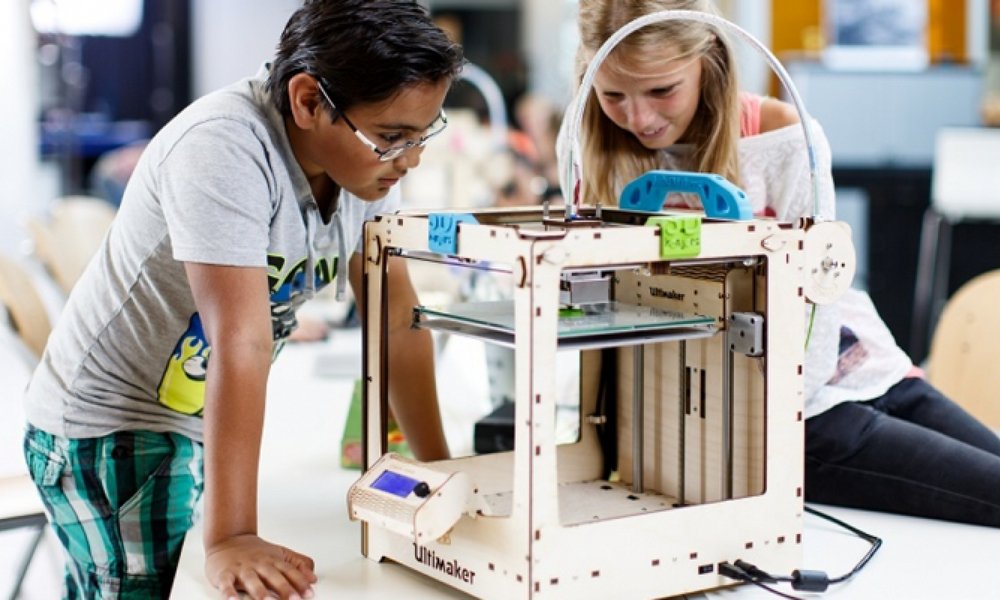
Technology is transforming the way students learn, explore, and create. One of the most exciting innovations in modern education is 3D printing. This technology allows students to turn digital designs into real physical objects, making learning more interactive and hands-on. Instead of only reading about concepts in textbooks, students can design, build, and test their own creations.
3D printing works by creating objects layer by layer using materials such as plastic or resin. A digital design is first created using special design software, and the 3D printer then brings that design to life. What once seemed like advanced industrial technology is now becoming increasingly accessible in classrooms and learning labs.
In education, 3D printing is more than just a technological tool. It is a powerful way to encourage creativity, improve problem-solving skills, and help students better understand complex ideas. By allowing students to experiment and build real models, it transforms learning into an engaging and exciting experience.
Enhancing Learning Through Hands-On Creativity
One of the biggest advantages of 3D printing in education is the opportunity for hands-on learning. Students are no longer limited to imagining how things work—they can actually create and test them. This approach makes learning more engaging and helps students understand concepts more clearly.
For example, in science classes, students can print models of the human heart, planets, or molecules to study them more closely. In mathematics, geometric shapes can be printed to help students visualize angles and dimensions. History students can even recreate historical artifacts or architectural structures to better understand different cultures and time periods.
3D printing also introduces students to design thinking. Before printing an object, students must first plan their idea, create a digital model, and consider how the object will function. If the design does not work as expected, they must adjust and improve it. This process teaches patience, experimentation, and problem-solving.
Creativity is another important benefit. With 3D printing, students can turn their imagination into real objects. They can design custom tools, creative art pieces, models, or prototypes. This freedom encourages students to explore their ideas and develop confidence in their ability to create something new.
Another advantage is collaboration. Many 3D printing projects involve teamwork where students share ideas and work together on designs. Through collaboration, they learn communication skills and how to combine different perspectives to build better solutions.
Preparing Students for Future Innovation.
As technology continues to evolve, skills related to design, engineering, and innovation are becoming increasingly valuable. 3D printing introduces students to these skills at an early stage and prepares them for future careers in fields such as engineering, architecture, product design, healthcare, and manufacturing.
By learning how to use 3D design software and printers, students gain practical knowledge about digital design and production. These skills are already being used in many industries, including medicine where doctors use 3D printing to create medical models and prosthetics.
3D printing also encourages an innovative mindset. Students begin to see that they can create solutions to real-world problems. For example, they may design a tool to help organize school supplies, create a prototype for a new product, or build parts for a robotics project.
Another important aspect of 3D printing is experimentation. Students learn that not every design will work perfectly on the first try. They must test, modify, and improve their ideas. This teaches resilience and helps them understand that innovation often comes through trial and improvement.
Educators are increasingly recognizing the value of 3D printing because it integrates multiple subjects at once. A single project may involve art, mathematics, engineering, and computer skills. This interdisciplinary learning helps students develop a deeper understanding of how different subjects connect in real-world applications.
Inspiring the Creators of Tomorrow
3D printing is opening new possibilities for education by transforming students from passive learners into active creators. Instead of simply studying ideas, students have the opportunity to design, build, and experiment with their own projects.
By encouraging creativity, innovation, and problem-solving, 3D printing helps students develop skills that will be valuable throughout their lives. It inspires curiosity and allows young learners to explore technology in a meaningful and exciting way.
As schools continue to adopt new technologies, 3D printing is becoming an important tool for modern education. It not only enhances learning but also empowers students to imagine and create the world around them.
In a future driven by innovation, giving students the tools to design and build their ideas can make a lasting impact. 3D printing in education is not just about making objects—it is about unleashing creativity and inspiring the next generation of inventors and problem-solvers.