
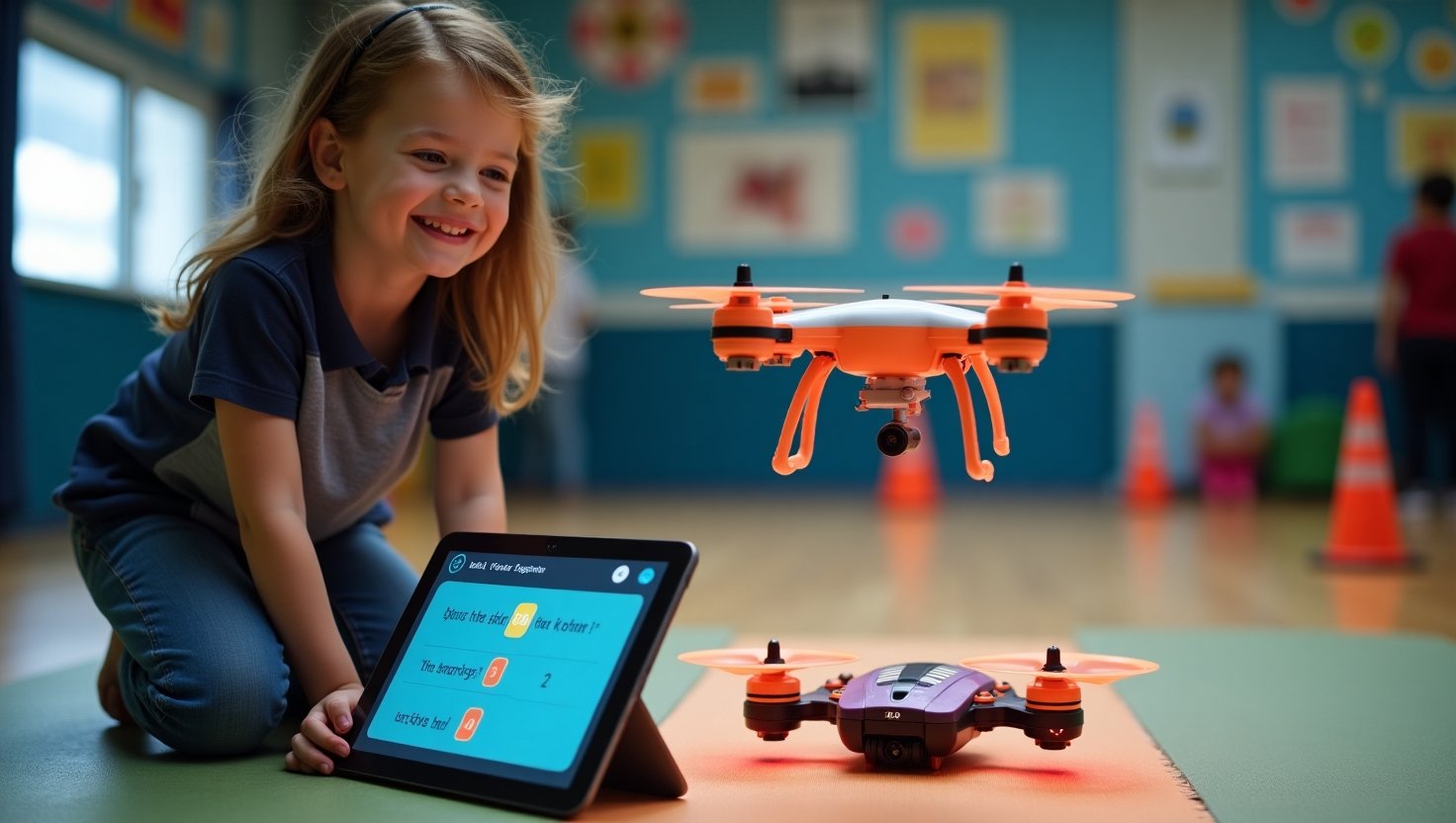
Drones have quickly become one of the most exciting technologies of the modern world. From aerial photography and agriculture to rescue missions and delivery services, drones are being used in many industries. Behind every drone flight is a powerful combination of engineering, sensors, and programming that allows the drone to move, respond, and complete tasks.
Drone programming is the process of writing instructions that control how a drone behaves. These instructions tell the drone how to take off, move in different directions, avoid obstacles, and land safely. Learning drone programming not only introduces students to aviation technology but also helps them develop valuable skills in coding, problem-solving, and robotics.
For beginners, drone programming may sound complex, but it can actually be learned step by step. With the right guidance and tools, students can start with basic concepts and gradually progress to more advanced flight control and automation. This journey from simple commands to controlled flight makes drone programming both educational and exciting.
Understanding the Basics of Drone Programming
Before learning how to program a drone, it is important to understand how drones work. A drone, also known as an unmanned aerial vehicle (UAV), is a flying device controlled by software, sensors, and motors. It typically includes propellers, a flight controller, a battery, and communication systems that allow it to respond to commands.
Drone programming begins with simple instructions that control movement. These instructions tell the drone when to take off, hover, move forward, rotate, or land. Most beginner drone programming platforms use simple coding languages or visual programming tools that allow students to understand commands easily.
For example, a basic program might include commands such as “take off,” “move forward for three seconds,” “turn left,” and “land.” By combining these commands, students can create a flight path for the drone to follow.
Another important part of drone programming is understanding sensors. Drones use sensors such as GPS, cameras, and altitude sensors to understand their surroundings. These sensors help the drone maintain balance, avoid obstacles, and track its position in the air.
Programming drones also introduces students to logical thinking. When writing code for a drone, every instruction must be clear and accurate. If a command is incorrect, the drone may not behave as expected. This teaches students to test their code, identify problems, and improve their programs.
Learning these fundamentals helps beginners build confidence and prepares them for more advanced drone programming concepts.
From Coding Commands to Real Flight
Once the basic concepts are understood, students can move on to more advanced programming that allows drones to perform complex tasks. This stage is where coding and real-world flight come together.
Students can begin programming drones to follow specific flight patterns, such as squares, circles, or zigzag paths. These activities help them understand movement control, timing, and direction. They also learn how to combine multiple commands to create precise flight sequences.
Another exciting aspect of drone programming is automation. With the right code, drones can perform tasks automatically without constant manual control. For example, a drone can be programmed to take off, fly to a specific location using GPS, capture images, and return to its starting point.
Drone programming can also involve real-world applications. In agriculture, drones can monitor crops and collect data about plant health. In environmental research, they can help track wildlife or observe forests. In emergency situations, drones can assist in search and rescue operations by reaching areas that may be difficult for humans to access.
Learning to program drones also teaches responsibility and safety. Students learn how to operate drones carefully, follow flight rules, and respect privacy and safety guidelines.
Beyond technical knowledge, drone programming encourages creativity. Students can design their own flight challenges, develop aerial photography projects, or experiment with new ideas using drone technology.
Preparing for the Future with Drone Technology
Drone technology continues to grow rapidly, and the demand for skilled professionals in this field is increasing. Careers related to drone technology include drone piloting, aerial photography, robotics engineering, environmental monitoring, and even delivery services.
By learning drone programming early, students gain valuable experience with coding, robotics, and aviation technology. These skills can open doors to future opportunities in technology and engineering fields.
More importantly, drone programming makes learning interactive and engaging. It combines creativity, technology, and real-world applications in a way that inspires curiosity and innovation.
As technology continues to evolve, drones will play an even bigger role in many industries. Learning how to program and control drones today can help students develop the knowledge and confidence they need to explore the technology of tomorrow.